

“The Radio of the Future—the central tree of our consciousness—”
— Velimir Khlebnikov, The Radio of the Future (1921)¹
// CUT
Hayy learns anatomy by making a cut.²
When the doe that raised him dies, he opens her body looking for whatever has disappeared. The organs remain. The body remains. Life does not. The incision produces a problem of localization: where was the principle that made this body alive?
[ body / organs / life ]
↓
[ absence ]
Hayy ibn Yaqzān performs another dissection at a larger scale.
Remove language. Remove institutions. Remove teachers, archives, inherited doctrine, interlocutors. Cut one human being away from society and leave him on an island.
/
Have we isolated intelligence?
/
Ibn Tufayl subtracts the machinery through which a mind becomes historical and asks how much cognition can cultivate for itself. Hayy moves from bodily insufficiency to tools, from the corpse to anatomy, from fire toward abstraction and metaphysics. Yet fitra remains: a congenital endowment whose potentials can become actual. Lenn E. Goodman explains Hayy’s independence through precisely what the experiment cannot remove: his capacities and his continuing confrontation with an intelligible world.³
The cut isolates a person. Whether it isolates cognition is less clear.
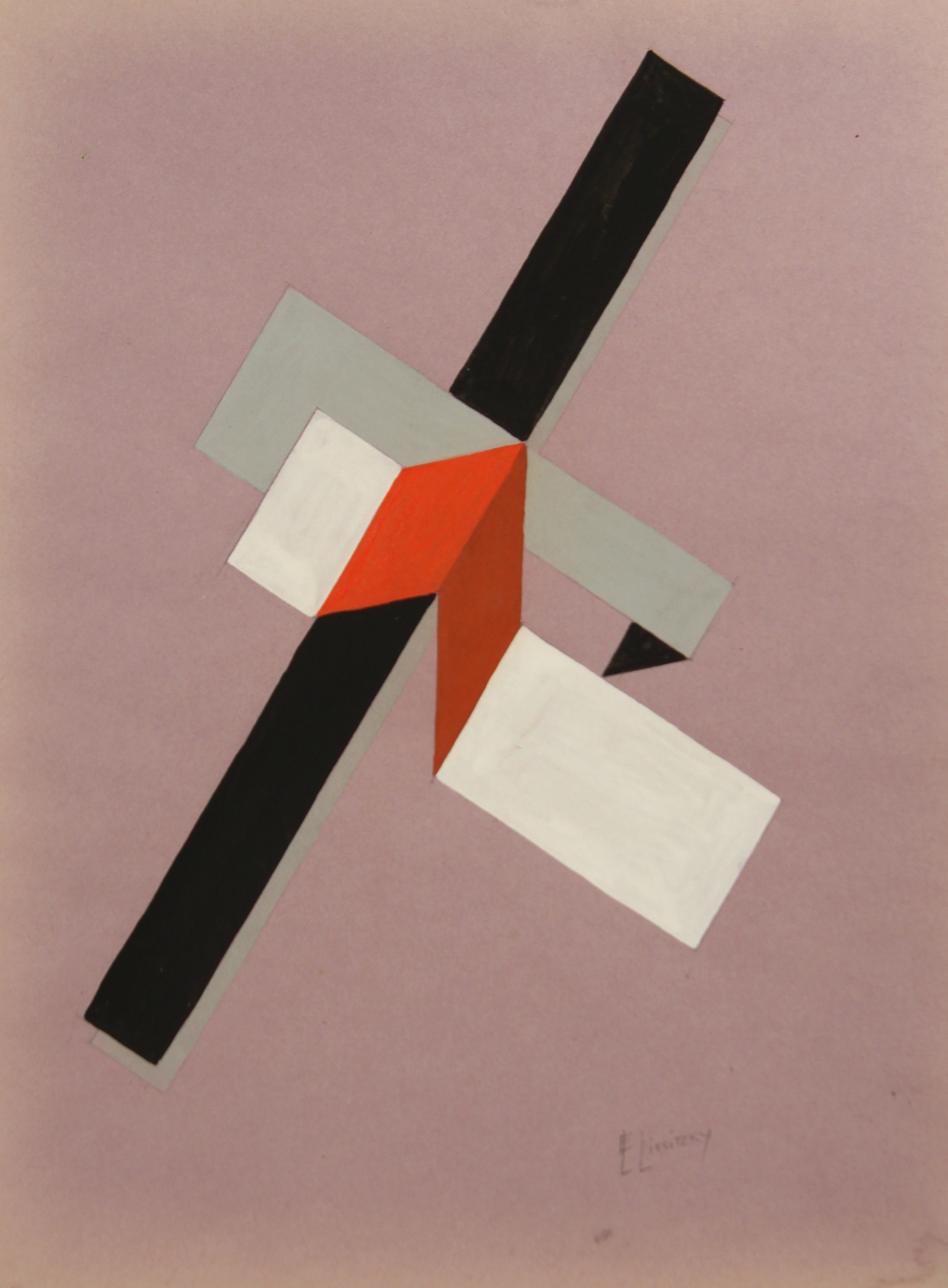
··· RESIDUE
[ what remains? ]
Body.
Memory.
Constraint.
Repetition.
Resistance.
Affordance.
Feedback.
Fitra.
+an island.
The island appears empty because almost everything recognizably social has disappeared. Cognitively, it is dense. Hayy’s inadequate body encounters better-equipped animals and produces artificial extensions. The corpse defeats his desire to restore life and forces a new distinction. Fire returns consequences to manipulation. Hayy acts; something answers; subsequent action changes.⁴
[ action → consequence → altered action ]
Calling the environment a hidden teacher preserves too much of the old picture. Hayy remains the learner and nature simply takes the instructor’s place. More interestingly, something may participate in the realization of cognition without becoming another cognitive subject.
The corpse does not think. Fire does not think. The island need not think.
//
Remove their resistance, regularity, and capacity to return consequences to action, and the sequence through which Hayy becomes capable of thought disappears with them.⁵
↻ CHANGE OF BASIS
Under subject / object Hayy thinks; the island is thought about.
↓
Under activity / mediation / transformation, the scene becomes harder to stabilize.
Evald Ilyenkov refuses to deposit the ideal neatly inside individual consciousness. Ideal forms exist through human activity and their embodiment in language, tools, books, machines, buildings, and other material forms carrying collective histories. On these terms, Hayy should almost be impossible. Ibn Tufayl has removed nearly all of the historical-cultural machinery through which Ilyenkov’s thinking human becomes possible⁶. Fitra makes the disagreement sharper. Does it name only a minimal capacity for cognition, or does it place inside the solitary individual what a social theory of mind would distribute across history, language, and collective practice?
Hayy can then be read as an experiment in minimum viable mediation⁷, although the minimum itself is already theoretically loaded.
Remove the book, institution, teacher, inherited tool, collective archive. Mediation persists in:
animal bodies → handmade instruments → heat → death → motion → celestial regularity
The experiment attempts to subtract mediation and discovers a residue it cannot survive without.⁸
[ MONTAGE ]
There is another kind of cut.
DISSECTION
cuts to locate
/
COLLAGE
cuts to recompose
A fragment is separated from one organization and made adjacent to something it did not previously touch. In Reza Negarestani’s tektological framework, montage belongs to a broader set of operations for recomposing forms, models, instruments, institutions, and protocols.⁹
[ fragment ] // [ fragment ]
↓
[ new adjacency ]
Montage makes cutting double: decomposition can become the condition of another organization. Soviet photomontage gives the operation a literal visual grammar, clipping existing images and forcing new adjacencies.¹⁰
If Hayy’s dissection asks where life is, montage asks what can be recomposed once localization fails.
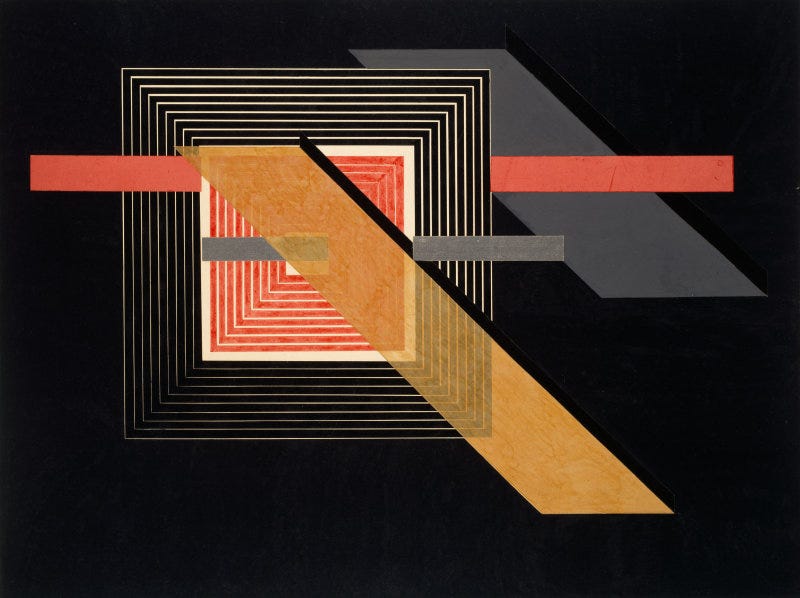
↳ FOLD
Fold the island.
In 1921, Velimir Khlebnikov imagined Radio as the “central tree of our consciousness,” a technical nervous system extending collective mental life across distance. A century later, Benjamin H. Bratton makes that displacement architectural. Earth, Cloud, City, Address, Interface, and User become layers of The Stack; the User appears from within an apparatus of computation, addressing, infrastructure, and interfaces.¹¹
Hayy’s island answers through physical causality. Contemporary environments increasingly classify, remember, predict, address, and preformat possible action. Ian Cheng’s Emissaries makes this visible in another register: cognitive evolution unfolds inside simulated ecologies whose conditions shape what their agents can become.¹²
Infrastructure need not have a mind for the boundary between infrastructure and cognition to become difficult to take for granted.
body
↳ tool
↳ interface
↳ institution
↳ platform
↳ technosphere
↳ planet
//
Where, exactly,
did the thinker disappear?
[ ] ⇄ [ ] GLUING TEST
Two descriptions are now available.
[ A ]
Hayy is an autonomous intelligence encountering an external world.
[ B ]
Hayy’s cognition is realized through an organization of capacities, interventions, resistances, and feedback.
The first retains agency. The second retains the conditions under which agency develops.
[ A ] + [ B ]
?
Can they be glued?
Negarestani’s tektological account of viable organization offers one way of testing the join. A viable organization remains open to re-specification while answerable to metabolic constraints, interfaces, and paths of repair. When the return relation fails, a system may continue acting while consuming the conditions that sustain it.¹³
Applied back to Hayy, this complicates autonomy. Dependence is unavoidable. A more demanding autonomy would concern the organization of dependencies themselves.
/
Autonomy is the capacity to reorganize one’s dependencies.
/
Hayy’s first achievement is learning without explicit human instruction. A further order of autonomy would involve perceiving something of the architecture through which learning occurs: which constraints organize inquiry, which interfaces make a world actionable, which dependencies can be altered.
× SCALE ERROR
At this point the cut fails again,
now at scale.
Adam Frank, David Grinspoon, and Sara Walker ask whether intelligence might operate as a collective process integrated into planetary systems. Their proposal pushes the possible unit of intelligence beyond an organism.¹⁴
1 agent
2 agents
10 agents
100 agents
≠
collective intelligence
Recent work on multi-agent AI sharpens the problem from another direction. One study (Kim et al.) finds that adding language-model agents does not reliably increase performance — coordination can help or hurt depending on task structure, model capability, and architecture. Another (Kraidia et al.) finds something more disturbing: agreement can rise while accuracy falls.¹⁵
Scale proves little. Plurality proves little too.¹⁶
/
communication ≠ intelligence
consensus ≠ accuracy
scale ≠ organization
/
Collective intelligence cannot be identified with multiplication, communication, or consensus. The stronger test is whether the organization can revise the dependencies through which its collective behavior is produced: whether differences remain available as information, whether failure alters subsequent behavior, and whether relations among agents can themselves be reorganized.
Such intelligence would need neither a gigantic mind nor a collective “we.” Cognition could exceed individual possession while remaining distributed across agents, representations, interfaces, infrastructures, and feedback loops.
Perhaps the “we” arrives too late.
↩ RETURN
Return the Stack to an island.
Return planetary intelligence to one human body beside an opened animal.
//
Hayy cuts into the doe expecting localization to reveal life. Ibn Tufayl cuts the human away from society expecting subtraction to reveal intelligence.
Neither principle remains comfortably where the cut expected to find it.
Montage adds another possibility. What escapes localization does not have to dissolve. It may persist through relations composed across the cut. The tree of consciousness may have never grown inside a single skull.
//
Hayy is socially solitary. His cognition remains relational. The environment need not become another mind to belong to the organization through which thinking becomes possible.
The desert-island experiment succeeds through this failure of isolation. It cuts away the apparent surroundings of intelligence and leaves us unsure that those surroundings were ever merely surrounding it.
//
The island isolates a body.
/
Intelligence escapes the cut.
Notes
1. Velimir Khlebnikov, “The Radio of the Future” (1921), in The King of Time: Selected Writings of the Russian Futurian, ed. Charlotte Douglas (Cambridge, MA: Harvard University Press, 1985), 155. Khlebnikov imagines Radio as the “central tree of our consciousness,” extending collective mental life through technical infrastructure. A digitized English version is available through the Museum of Imaginary Musical Instruments.
2. The vocabulary of the cut recalls Michel Foucault’s claim that “knowledge is not made for understanding; it is made for cutting.” The line appears in “Nietzsche, Genealogy, History,” where “effective history” disrupts the apparent continuity and stability of historical identities. Michel Foucault, “Nietzsche, Genealogy, History,” in The Foucault Reader, ed. Paul Rabinow (New York: Pantheon, 1984), 76–100, at 88; see also the earlier English translation in Language, Counter-Memory, Practice, ed. Donald F. Bouchard (Ithaca: Cornell University Press, 1977), 139–164, at 154.
3. Lenn E. Goodman, introduction and notes to Ibn Tufayl, Ibn Tufayl’s Hayy Ibn Yaqzan: A Philosophical Tale, trans. Lenn E. Goodman, updated ed. (Chicago: University of Chicago Press, 2009). Goodman explicitly frames Hayy as a problem of education without institutions or instruction and identifies his natural endowment as the additional premise that makes such development conceivable. The tale is one in which Hayy discovers the world “unaided—but also unimpeded—by society, language, or tradition.”
4. Goodman traces Hayy’s development from technical invention and bodily deficiency through the death and investigation of the doe, fire, practical reason, and later metaphysical inquiry. In his reading, engagement with the natural world remains continuous with Hayy’s conceptual development. See Goodman, introduction to Hayy Ibn Yaqzan, especially the discussion of Hayy’s practical development and the transition from the doe’s death to the discovery of the vital principle.
5. The boundary problem intersects with Gregory Bateson’s ecological conception of mind and Andy Clark and David Chalmers’s “The Extended Mind,” Analysis 58, no. 1 (1998): 7–19. Clark and Chalmers open with the question, “Where does the mind stop and the rest of the world begin?” and argue that environmental processes can sometimes participate constitutively in cognition. The question pursued here is narrower: what becomes of the autodidact once the learner/environment boundary itself becomes unstable?
6. Evald Ilyenkov, “The Concept of the Ideal” (1977), in Problems of Dialectical Materialism (Moscow: Progress Publishers, 1977). Ilyenkov rejects the reduction of ideality to something located simply “in the head” and treats ideal forms as objectified in socially organized activity and the material world shaped by it.
7. Ibn al-Nafis’s The Theologus Autodidactus of Ibn al-Nafis, ed. and trans. Max Meyerhof and Joseph Schacht (Oxford: Clarendon Press, 1968), provides a countercase to Hayy. Recent scholarship argues that Kāmil’s trajectory is less a celebration of solitary rationality than a defense of the social anchoring of knowledge: after initial solitary discovery, he enters society, derives the need for law and prophecy, and rationalizes socially transmitted historical and religious knowledge. See Raissa A. von Doetinchem de Rande, “A Tale of Two Tales: Ibn Ṭufayl and Ibn al-Nafīs on the Place of Sociality in Human Life and Thought,” Sophia (2026).
8. A lateral constellation extends this disturbance of the sovereign thinker. Antonin Artaud, in The Theater and Its Double, relocates thought and affect into bodies, gesture, sound, spatial arrangement, and theatrical force. Fernando Pessoa fractures unified authorship through heteronyms whom he described as fabricated individualities with their own works and identities. Alexander Bogdanov provides the closest organizational analogue: he argues that even seemingly individual experience depends heavily on socially transmitted experience and methods of organization, while language organizes cooperation, accumulated experience, knowledge, and thought. Pessoa’s own account of heteronymy is preserved by Casa Fernando Pessoa; Bogdanov’s formulation appears in Tektology, Book 1, ch. 1, §4.
9. This formulation draws on diagrams presented by Reza Negarestani in Tektologus Autodidactus, The New Centre for Research & Practice, 2026, where arts and image-making are mapped through figuration, montage, and editing rules alongside models, instruments, institutions, and protocols.
10. The constructive sense of cutting recalls Soviet photomontage, particularly Aleksandr Rodchenko and Gustav Klutsis. MoMA describes early photocollage as a practice of clipping images from the press and reassembling them into unexpected combinations; Rodchenko treated photographic material as available for alteration, replication, and recombination.
11. Benjamin H. Bratton, The Stack: On Software and Sovereignty, 10th anniversary ed. (Cambridge, MA: MIT Press, 2026). Bratton describes planetary computation through six layers — Earth, Cloud, City, Address, Interface, User — understood together as an “accidental megastructure” combining computational, social, physical, and governing systems.
12. Ian Cheng, Emissaries (2015–17). Cheng describes the trilogy as a set of simulations concerned with “cognitive evolution, past and future, and the ecological conditions that shape it.” Agency appears through the interaction of agents with ecologies whose constraints and transformations remain active throughout the simulation.
13. Reza Negarestani, Tektologus Autodidactus, Sessions 2–3, The New Centre for Research & Practice, 2026. The seminar diagrams situate viable organization between design possibilities and metabolic constraints, with interfaces and paths of repair mediating between them.
14. Adam Frank, David Grinspoon, and Sara Walker, “Intelligence as a Planetary Scale Process,” International Journal of Astrobiology 21, no. 2 (2022): 47–61. The authors ask whether intelligence can be treated as a process operating across scales and develop the notion of “planetary intelligence” as collective knowledge integrated into the functioning of coupled planetary systems.
15. Yubin Kim et al., “Capable Language Models Can Outgrow the Benefits of Collaboration,” Nature Machine Intelligence 8 (2026): 1157–1172. Across 260 configurations spanning multiple benchmarks and coordination architectures, the authors find that adding agents can improve or degrade performance depending on model capability, task structure, and coordination costs. See also Insaf Kraidia et al., “When Collaboration Fails: Persuasion Driven Adversarial Influence in Multi Agent Large Language Model Debate,” Scientific Reports 16 (2026): 11640, which finds that one persuasive adversarial agent can reduce group accuracy while increasing consensus around incorrect answers.
16. Ursula K. Le Guin’s The Dispossessed (New York: Harper & Row, 1974) gives the same test a political form. Anarres asks whether a collective can preserve the capacity to revise its own relations without turning dissent into pathology or centralized authority into the only mechanism of correction. In this sense, Le Guin extends the problem of reorganizable dependencies from the individual autodidact to collective organization.
[ Written in Batumi, a port town on the Black Sea — perhaps an awkward place from which to imagine cognitive isolation ]